


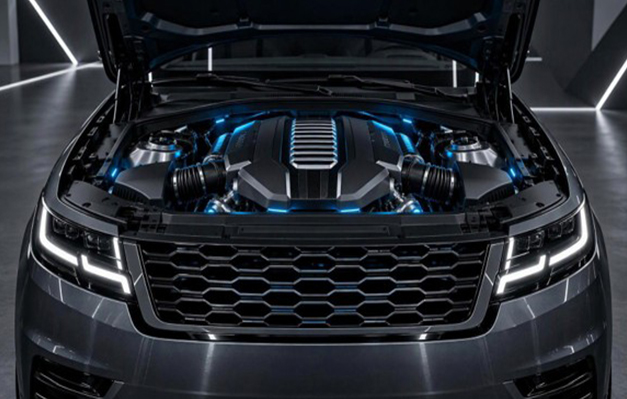
Range Rover L405 engine replacement starts with understanding your existing engine and the options available. This guide compares the four engines covered below, replacement costs and the checks to make before ordering.
Looking for reconditioned Range Rover L405 engines for sale in the UK? Compare more than the engine price: check compatibility, fitting, ancillaries and warranty details before choosing a supplier.
| Variant | Code | Power | Common faults | Reliability |
| 3.0L TDV6 | 306DT (single turbo) | 255–258 bhp | Oil cooler seals, EGR clogging, DPF | High |
| 3.0L SDV6 | 306DT (twin turbo) | 296–306 bhp | Timing chain stretch (pre-2014), turbo actuators, swirl flaps | Moderate |
| 4.4L SDV8 | 448DT | 339 bhp | Injectors, turbo plumbing leaks | Moderate–High |
| 5.0L V8 SC | AJ133 | 503–557 bhp | Coolant crossover leaks, chain guide wear, supercharger rattle | Moderate |
The single-turbo TDV6 carries less stress than the twin-turbo SDV6, which is why it’s the most respected option for long-term ownership.
The 3.0-litre TDV6 pairs a single turbocharger with 255–258 bhp and 443 lb-ft — plenty for everyday driving and moderate towing. Fewer turbos means fewer failure points, and its faults are largely manageable: oil cooler seals, EGR clogging and occasional DPF issues, all kept in check by servicing every 10,000 miles.
If you want the L405 to be dependable rather than dramatic, this is the engine that delivers.
| Engine | Fitted replacement (indicative) |
| 3.0L TDV6 / SDV6 | £5,400–£7,200 |
| 4.4L SDV8 | £7,000–£9,000+ |
| 5.0L V8 Supercharged | £8,000–£12,000+ |
When comparing engine supply and fitting quotes, check whether the engine, labour, gaskets, fluids and diagnostics are included. Ask which ancillaries are included and which are charged separately.
With the engine removed, these are worth renewing — and aren’t always in the headline price:
On a V8, revised coolant pipework is particularly worth doing. Ask before you compare quotes.
A reconditioned L405 engine is generally the safer long-term investment: stripped, cleaned and rebuilt with new seals and bearings and updated components such as revised coolant pipes, usually with a 12-month warranty. A used unit is cheaper but carries the donor’s unknown wear history — riskier still on twin-turbo and V8 variants.
With diligent maintenance — oil changes every 8,000–10,000 miles and timely cooling-system work — both the 3.0L TDV6 and 5.0L V8 can exceed 150,000 miles. Lifespan depends almost entirely on service history, driving conditions and fluid quality.
Swapping a TDV6 for an SDV6 or V8 is physically possible but rarely worthwhile: it needs ECU reprogramming, wiring changes and DVLA notification. Replacing like-for-like with an updated unit is almost always the sensible route.
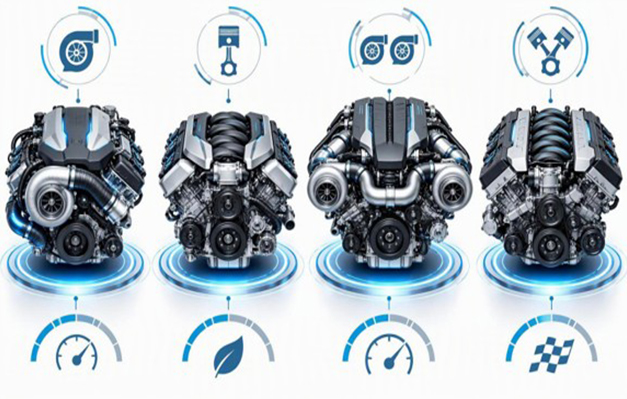
Think of the L405 range as a ladder from dependable to dramatic. At the dependable end sits the 3.0L TDV6: a single-turbo diesel making 255–258 bhp, with faults that respond well to maintenance. One step up is the SDV6 — same 306DT block, twin turbos, 296–306 bhp, and a longer list of things that can wear. Beyond that comes the 4.4L SDV8, the towing workhorse at 339 bhp and 3,500 kg. And at the top, the 5.0L V8 Supercharged (AJ133), 503–557 bhp of effortless performance, with the maintenance appetite to match.
Choosing between them is less about speed and more about how much complexity you’re happy to own and maintain.
To request a used Range Rover L405 engine replacement quote, have your registration, chassis details, engine code and any diagnostic results to hand. Decide whether you need supply-only or supply and fitting and ask for a written breakdown so you can compare quotes on the same basis.
These engines reward discipline. Oil changes every 8,000–10,000 miles — not stretched — keep the TDV6 and V8 healthy, and prompt attention to cooling components prevents the leaks that lead to bigger problems. A well-maintained L405 engine is a long-lived one; a neglected example is expensive on a grand scale.
Each L405 engine has a signature failure, and recognising it early is worth money.
On the TDV6, watch for oil cooler seepage, EGR clogging and the odd DPF issue — all manageable and all mitigated by 10,000-mile servicing. On the SDV6, the important one is timing chain stretch, especially on pre-2014 cars, alongside turbo actuator and swirl flap problems. On the SDV8, injectors and turbo plumbing are the expensive items. On the 5.0L V8, coolant crossover leaks, chain guide wear and supercharger isolator rattle are the known trio.
None of this makes these engines bad. It makes them predictable — and predictable is exactly what allows you to buy and maintain wisely.
These engines, particularly the twin-turbo diesels and the supercharged V8, reward owners who keep to the oil schedule and punish those who don’t. An 8,000–10,000 mile oil change is not a suggestion on an L405; it’s the difference between a long engine life and an expensive one.
Choosing an L405 engine is easier when you separate two questions. First: which variant suits how I use the car? Second: how do I buy that variant well? The first is about your needs — reliability, towing, performance. The second is about evidence — service history, fault-specific checks, and a warranty.
Answer both clearly and the purchase stops being stressful. Answer only the first and you may buy the right engine in the wrong condition, which on a Range Rover is an expensive way to learn the difference.
It’s a remarkable vehicle, and its engines are capable of long service when treated properly. The failures that fill forums are rarely random — they’re usually the result of stretched oil intervals or delayed cooling repairs. Handle those two things, choose the variant that matches your needs, and an L405 can be a dependable long-term car rather than a cautionary tale.
Which L405 engine should I choose?
For reliability and value, the 3.0L TDV6. For performance, the 5.0L V8 Supercharged. For towing, the 4.4L SDV8.
How much does an L405 engine cost to replace?
£5,400–£7,200 fitted for the V6 diesels, up to £12,000+ for the supercharged V8.
What are the common faults?
Oil cooler and EGR issues on the TDV6; timing chain and turbo actuators on the SDV6; coolant and chain guides on the V8.
Will a replacement last?
With correct oil intervals and cooling-system maintenance, yes — both the TDV6 and V8 can exceed 150,000 miles.
Can you recover my Range Rover?
Recovery can usually be arranged through the supplier network — confirm cost and timing in the quote.
Handle the oil schedule and the cooling system, and the L405 repays you with years of dependable service — which is the whole point of choosing the right engine in the first place.
Looking for a used or reconditioned Range Rover L405 engine? Tell us your registration, engine code and whether you need delivery, fitting or vehicle recovery. Include your location and any diagnostic findings so suppliers can quote for the work you need. Ask for written warranty terms and a clear list of included parts and labour.
Request your Range Rover L405 engine quote — share your vehicle details and fitting requirements to get started.



